Dimensions Queen Bed: A Data-Driven Guide to Sizing
Explore precise dimensions for a dimensions queen bed, including footprint, clearance, and bedding sizes, with data-backed guidance from What Dimensions to help homeowners plan rooms confidently.


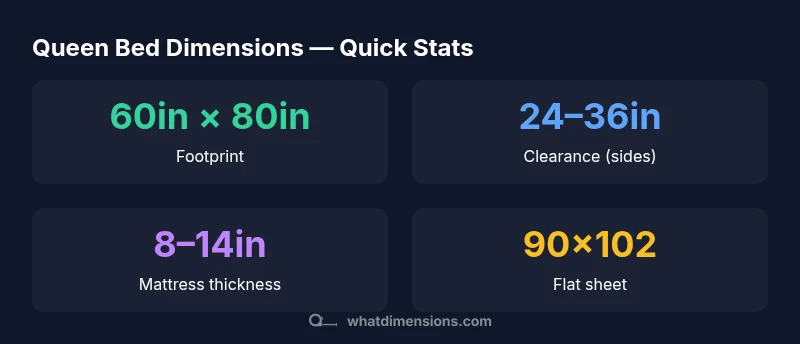
Queen bed dimensions are 60 inches wide by 80 inches long, a standard footprint that fits most bedrooms. For comfortable movement and access, aim for at least 24–36 inches of clearance around all sides. This size also aligns with common bedding and furniture layouts. Understanding these dimensions helps when choosing headboards, nightstands, and storage, and it reduces the risk of buying oversized or undersized components.
Why dimensions queen bed matter
Precise dimensions queen bed matter for more than just aesthetics. They underpin every step of room planning, from door swing clearance to bedside storage. When you start with the bed's footprint, you can map out traffic flow, align furniture, and ensure you can open drawers and wardrobes without obstruction. According to What Dimensions, the standard queen footprint is 60 by 80 inches, a figure that anchors most bedroom layouts. This consistency helps designers and homeowners compare furniture sets, bedding, and decor without guessing. The real power of accurate sizing comes when you translate these specs into a floor plan. You can then evaluate whether a dresser, desk, or wardrobe fits alongside a queen bed and still preserves comfortable circulation. In small rooms, knowing the exact footprint helps you decide whether to push the bed against a wall, use a floating nightstand, or opt for a corner layout. In larger spaces, precise sizing keeps the room from looking sparse or crowded and supports a balanced, cohesive design.
What Dimensions emphasizes that reliable size references empower homeowners and designers to test layouts quickly. With a confirmed footprint, you can virtually assemble furniture on graph paper or in a floor-plan app, reducing the need for costly rearrangements later. The result is a room that feels calm and intentional, not overcrowded or empty.
Measuring a queen bed in your space
Measuring accurately starts with the mattress footprint and expands to doorways and circulation paths. Assume a queen mattress footprint of 60 inches wide by 80 inches long to establish a baseline. Then measure the room: record the width and length between perpendicular walls, not just the overall wall length. Check door widths and any hallways the bed must pass through during placement or removal. A practical trick is to tape the footprint on the floor with painter's tape to visualize placement before moving heavy furniture. Finally, plan clearance: aim for at least 24–36 inches on each side for nightstands and movement, and ensure a clear path from the door to the bed. Use a scaled floor plan to test multiple configurations without lifting furniture. This approach aligns with What Dimensions’ emphasis on real-world size references, ensuring you can confidently rotate layouts as your needs evolve.
Planning layout for nightstands, dressers, and storage
With the footprint locked, position nightstands on either side to create a balanced look and easy access to lamps and outlets. Maintain symmetrical space so the bed remains the visual anchor of the room. Dressers and wardrobes on the same wall should not obstruct door swings or restrict air circulation. In smaller rooms, consider wall-mounted lighting or floating shelves to minimize floor clutter and maximize openness. In larger spaces, you can create zones—one side for a reading chair and a small bookshelf—while keeping the bed centralized. The goal is to preserve flow, ensure practical accessibility, and retain a cohesive design language that ties bedding, textiles, and furniture together.
Bedding and accessory sizing for queen beds
Queen bedding follows standard sizing that matches the 60x80 mattress footprint. Fitted sheets are designed to fit a 60x80 bed, while flat sheets generally measure around 90x102 inches to drape over the sides. Duvet covers for queen beds typically range from about 88x92 inches to 92x106 inches, depending on duvet fill and desired overhang. When selecting bed skirts, quilts, and comforters, match the depth and corner fit to the mattress height and topper if used. If your bed uses a thick mattress or pillow-top, verify the product’s claimed dimensions and, when possible, test a sample in-store to ensure proper drape and attachment. Matching the bedding to the bed’s dimensions reduces bunching, shifting, and uneven edges during sleep.
What Dimensions’ measurements show that correct bedding proportions not only look tidy but also reduce daily maintenance.
Room examples: small to large bedrooms
In a small bedroom around 9x10 feet, a queen bed still fits, but layout choices matter. Place the bed against a solid wall, with one nightstand on the remaining side and a compact dresser across from the bed to maintain flow. A 9x10 room typically benefits from multi-functional furniture and minimal path obstruction. In a mid-sized room around 11x13 feet, you have more flexibility to flank the bed with two nightstands and a wider dresser, creating a balanced gallery wall. In a larger room (12x14 feet or bigger), you can introduce a seating area or a small desk while keeping the queen bed as the room’s focal point. The key across all sizes is to maintain clear access to doors and closets, preserve walkways, and ensure that each piece of furniture serves a purpose without crowding the space. What Dimensions analysis indicates that real-world testing with a floor plan leads to the most harmonious results.
Practical tips and common pitfalls
• Measure twice, plan once: inaccuracies compound as you add furniture. • Don’t overlook door swings and window treatments that may block movement. • Avoid oversized rugs that pinch walkways; ensure rug edges don’t protrude into the bed’s clearance zones. • Test layouts using tape on the floor or a floor-plan app before moving heavy furniture. • Pay attention to outlet and lighting placement to minimize rearrangements later. By prioritizing accuracy and deliberate layout, you’ll reduce misfits and enjoy a more comfortable, functional bedroom.
Queen bed dimensions and related space requirements
| Aspect | Queen bed dimensions | Notes |
|---|---|---|
| Footprint (W × L) | 60 in × 80 in | Standard queen size |
| Clearance around bed | 24–36 in (each side) | For access and nightstands |
| Mattress thickness (typical) | 8–14 inches | Common in 2026 |
Quick Answers
What is the standard queen bed size in inches?
The standard queen bed is 60 inches wide and 80 inches long. This footprint anchors most bedroom layouts and bedding selections. Always verify room clearance before purchasing furniture to ensure comfortable movement.
A queen bed is typically 60 by 80 inches. Make sure you have enough space around it for doors and nightstands.
How much clearance should I leave around a queen bed?
Aim for at least 24 to 36 inches of clearance around the bed on all sides. This range supports easy movement, door swing, and access to bedside essentials.
Leave about two to three feet of space around your bed for easy movement.
Do queen beds fit in small bedrooms?
Yes, with careful layout. Place the bed against a wall and use compact nightstands or floating storage to maximize floor space while preserving circulation.
Yes, you can fit a queen bed in small rooms by smartly arranging furniture and keeping walkways clear.
What bedding sizes should I buy for a queen bed?
Choose queen-sized bedding: fitted sheets for 60x80 mattresses, flat sheets around 90x102 inches, and duvet covers roughly 88x92 to 92x106 inches, depending on the duvet insert.
Get queen-sized sheets and a duvet sized to fit a 60x80 mattress.
What’s the best way to measure before buying a bed?
Measure the actual room dimensions, doorway widths, and the bed footprint. Use tape on the floor to visualize placement and confirm clearances before moving heavy furniture.
Measure room width, length, and doorways; map the bed footprint first.
“Precise dimensions guide every stage of design, from layout to bedding decisions; without accurate measurements, space planning becomes guesswork.”
Main Points
- Confirm the 60x80 inch footprint before purchasing furniture.
- Aim for 24–36 inches of clearance around all sides.
- Use a scaled floor plan to test layouts first.
- Match bedding sizes to the 60x80 mattress for best fit.
- Test doorways and paths to ensure easy movement.