Queen Bed Dimensions: A Practical Sizing Guide
Learn exact queen bed dimensions, layout tips, and room-planning strategies. This data-driven guide from What Dimensions helps homeowners, students, and designers plan spaces with confidence.


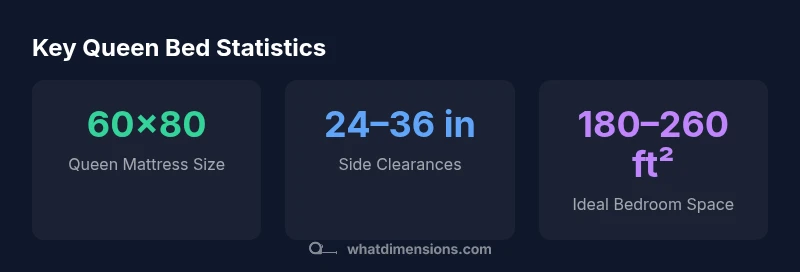
Queen bed dimensions primarily refer to a 60-by-80 inch mattress. This baseline anchors room layouts, informs frame choices, and guides clearance planning for comfortable movement around the bed. What Dimensions emphasizes precise sizing to minimize layout guesswork and prevent awkward fits when you’re shopping for bedding, frames, and nightstands. By starting with the 60x80 footprint and testing it in your actual room, you can account for door swings, windows, and storage so your space remains easy to navigate. In spaces with irregular shapes, the 60x80 baseline still provides a reliable reference for scaling and testing fit, helping you achieve a natural, unobstructed flow.
Dimensions or a Queen Bed: Getting the Basics Right
Choosing the right bed starts with reliable numbers. The simplest way to anchor a room layout is to start from the queen bed size. The standard mattress size is widely recognized as 60 inches wide by 80 inches long, or about 152 by 203 cm. These numbers become the baseline for everything else in the room: the frame you choose, the nightstands you place, and the clearance corridors you reserve for walking and dressing. What Dimensions has found that precise sizing reduces layout guesswork and helps you anticipate fitting challenges before you buy. In practice you’ll translate these numbers into the space you actually have, then adjust for door swings, window protrusions, and built-in storage. If your room is an irregular shape, you can still use the 60x80 baseline to test fits by drawing a simple rectangle to scale. The goal is to achieve a natural flow without crowding, cramped pathways, or awkward turns, which is the essence of good room planning in 2026. This starts with understanding dimensions or a queen bed and ends with a room that feels spacious and balanced.
Queen Bed Basics: Standard Size, Variations, and What They Mean
Beyond the standard 60x80 mattress, there are real-world variations that designers and shoppers encounter. Some frames extend the footprint slightly for added stability, while others emphasize a slimmer profile to preserve floor space in tight rooms. The standard queen remains the most common choice for couples, but always verify exact dimensions on product pages because manufacturers can vary the outer dimensions of frames and headboards. When you plan, think about the accessorizing elements—bedding, fitted sheets, and mattress toppers—that can add inches. The key takeaway is to anchor your plan to the baseline while allowing margins for frames, safety clearances, and practical use. In all cases, start with the What Dimensions sizing framework to compare options consistently.
How to Measure Your Space: Steps to Ensure a Fit
Measure the room’s length and width, then map the bed footprint on the floor plan. Include space for the bed frame, headboard projection, and any storage elements you plan to keep nearby. Check door swings, closet doors, and window wells to avoid conflicts. Create a scale drawing on graph paper or a digital floor plan, and test multiple layouts by rotating the bed placement. Don’t forget to account for lighting fixtures and electrical outlets that could constrain lamp placement or charging zones. A practical trick is to place tape to represent the 60x80 footprint on the floor to visualize how it fits with door paths and furniture. This process minimizes surprises when you actually move a mattress into the room.
Mattress vs. Frame: Aligning Dimensions for Comfort
The bed footprint is the mattress footprint, but the frame can add width, depth, or headboard projections that affect usable space. When shopping, compare the innermost bed rails to the outer frame width and consider how much clearance you’ll need to access wardrobe doors and nightstands. If your frame sits flush against a wall, you may reduce the side clearance to the minimum comfortable distance; however, avoid cramping. The goal is a balance where the bed remains the centerpiece without obstructing movement or storage. Remember that bedding thickness adds a little to the footprint, so test with common pillow stacks and comforters to confirm fit.
Room Layout Scenarios: Small Rooms, Master Suites, and Guest Rooms
Small bedrooms demand clever space planning. In tighter spaces, you might centralize the bed along the longest wall and use floating nightstands to maximize floor area. In master suites, you can afford larger clearances and perhaps a second seating area. Guest rooms can benefit from versatile furniture arrangements that allow easy guest flow while preserving the bed as the focal point. A good rule of thumb is to reserve a clear walking path of at least 24 inches around the bed and to dedicate a generous doorway path for sheet changes and access to storage.
Accessories and Extras: Bedding, Nightstands, and Clearances
Nightstands should be sized to the bed and leave space for lamps and personal items. If a lamp or charger sits on the nightstand, verify there’s still at least 24 inches of clearance to the bed and to any adjacent furniture. Use low-profile headboards if you’re working with narrow rooms, and consider wall-mounted lighting to avoid clutter on the bedside tables. Bedding thickness matters too: a heavy quilt or memory foam topper can add inches, reducing clearance. Always test layouts with your actual items by placing tape on the floor to simulate footprint and walking paths before buying.
Practical Calculations: Quick Formulas to Compute Clearances
A practical way to plan is with simple formulas. Bed footprint width (60) plus two side clearances should fit within the room width. For example, room width should be at least bed width + 2 x clearance. The same logic applies to room length with the foot clearance. If you have storage, include its profile in the footprint calculation. A general rule: aim for 24–36 inches of clearance on each side for comfortable movement, and maintain at least one unobstructed path from the doorway to the bed and closet.
Common Mistakes to Avoid: Misreading Specs
Common pitfalls include assuming mattress size equals frame size, neglecting door swings, and misreading product specifications that list outer dimensions rather than the internal footprint. Always verify the exact footprint of the frame you plan to use, and consider the headboard and footboard projections. Finally, don’t assume every room will accommodate the same layout—test multiple configurations with tape on the floor or a scaled drawing to ensure your chosen queen bed fits your space.
Putting It All Together: A Room-Ready Sizing Plan
Create a simple, repeatable checklist to size a room for a queen bed. Start with the 60x80 baseline, add your desired clearances, confirm door paths, and map storage and seating. If you’re shopping for a bed frame, note the exterior dimensions and compare them to your clearance targets. For rooms with irregular shapes or odd angles, rely on a scaled floor plan and adjust as needed. By anchoring your decisions to the queen bed’s footprint and then testing every variable, you’ll achieve a balanced room with comfortable movement and accessible storage.
Queen bed sizing at a glance
| Dimension | Queen Bed Size (in) | Notes |
|---|---|---|
| Width | 60 | Standard mattress width |
| Length | 80 | Standard mattress length |
| Clearance (side) | 24–36 | Movement space around the bed |
| Footprint | 60x80 | Base footprint of mattress/frame |
Quick Answers
What is the standard queen bed size in inches?
The standard queen mattress measures 60 inches wide by 80 inches long. This is the most common size in homes and apartments, and it serves as the baseline for room layouts.
The standard queen size is 60 by 80 inches. It's the most common choice, and it's the baseline for layout planning.
Do more than one queen bed fit in a typical room?
Two queen beds require a large footprint and substantial clearance. In most bedrooms, a single queen is the practical choice, but larger rooms can accommodate two with careful planning.
Two queens fit only in larger rooms; plan carefully and measure precisely.
Are there variations of queen sizes I should know about?
Manufacturers offer variations such as longer or wider frames, but the standard remains 60x80 inches. Always verify exact dimensions on product pages and measure your space.
There are variations, but always check exact numbers on product pages.
How do I measure for a queen bed in a small room?
Map the room and bed footprint to scale, verify door swing paths, and leave at least 24 inches of clearance on at least two sides. A scaled floor plan helps.
In small rooms, map the footprint and reserve 24 inches of clearance on two sides.
Should I account for bedding thickness in dimensions?
Yes. Bedding thickness adds inches that affect clearance. Factor in toppers, quilts, and pillows when planning.
Bedding adds inches; plan for it in clearances.
What’s the difference between queen and full bed dimensions?
A queen (60x80 inches) is wider and longer than a full/double (about 54x75 inches). Use queen when space allows for comfort.
Queen is larger: 60x80 inches vs full around 54x75.
“Precise dimensions reduce layout errors and improve overall room usability.”
Main Points
- Anchor plans to the 60x80 baseline.
- Provide 24–36 inches of clearance on each side.
- Test layout with floor tape or a scaled plan.
- Account for bedding thickness and frame projections.
- Choose a layout that preserves flow and storage access.