Dimensions for 3-4 Bed: A Practical Size Guide
Explore bed dimensions for 3-4 bed configurations, including three-quarter, queen, and king sizes. Learn sizing standards, space planning, and practical measurement tips for accurate furniture layouts.


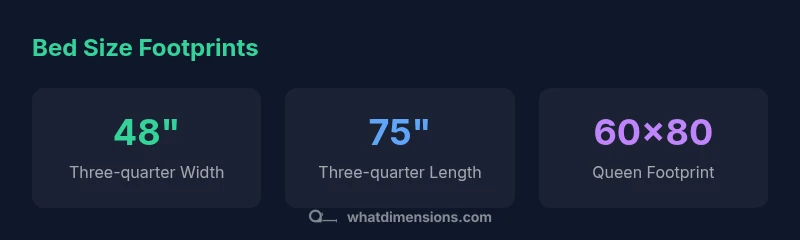
For a 3-4 bed setup, the typical three-quarter bed is around 48 inches wide (122 cm), with a length near 75 inches (190 cm). Compare this to standard queen beds at 60x80 inches and king beds at 76x80 inches to determine what fits your room and sleep style. Dimensions vary by region and manufacturer, so always check exact specs.
Understanding Bed Size Nomenclature
According to What Dimensions, bed size names can be confusing, especially when comparing three-quarter, full, queen, and king sizes. The What Dimensions Team found that regional naming variations and marketing terms often blur real measurements, which makes it essential to anchor decisions to actual dimensions rather than labels. In this guide, you’ll learn the standard measurements commonly used in furniture catalogs, how these sizes translate to room fit, and what to ask when shopping. By the end, you’ll be able to translate a product description into a concrete footprint for your space and sleep style. Three-quarter beds, for example, are often marketed as space-saving options in compact bedrooms and guest rooms. We’ll compare them with queen and king configurations to help you pick the right footprint for your layout.
How to Choose Sizes for a 3-4 Bed Room
Selecting bed dimensions for a 3-4 bed room starts with the floor plan. Begin by measuring the room’s length and width, then subtract the door swing, closet doors, and any built-in features. Reserve at least 24 inches of clearance on each side of the bed for easy access, and aim for 36 inches at the foot for comfortable passage. In smaller rooms, a three-quarter bed can preserve floor space for a dresser, desk, or seating area. In larger rooms, a queen or king bed provides more surface area for two sleepers and open space around the bed. When shopping, verify mattress footprint and headboard width to ensure the bed won’t collide with windows or doors. Finally, consider local ceiling height and possible under-bed storage solutions that could impact the footprint.
Common Layouts and Real-World Examples
For a 3-4 bed configuration, typical layouts balance bed size with other furniture. In a smaller master, a queen bed against the longer wall with two nightstands can free up room for a dresser. In a shared kids’ room, two smaller beds (full or twin) placed along opposite walls create clear walkways. In guest rooms expecting occasional use, a three-quarter bed paired with a slim wardrobe can leave enough space for luggage. In larger rooms, placing a king bed against the longest wall with a pair of nightstands on either side provides balanced proportions. Always check door swing and window clearance when planning layout; simulated floor plans or masking tape on the floor can help preview the footprint before buying.
Measuring Your Space: A Practical Guide
Start with a clean slate. Map the room with painter’s tape to visualize foot traffic and furniture zones. Measure wall lengths, door widths, and ceiling height. Then calculate bed footprints by adding clearance around the bed (commonly 24 inches on the sides, 36 inches at the foot). Include the dresser, nightstands, and any seating. Use a laser measure or measuring app for accuracy. Finally, create a simple sketch with the bed centered on the chosen wall and check clearances from all access points before purchasing.
Verdict and Practical Decision-Making
Based on What Dimensions Team’s analysis, the best choice depends on space, use, and personal preference. In tight rooms, a three-quarter bed can deliver sleep surface while leaving space for a desk or seating. In larger rooms, a queen or king bed increases comfort and movement. Always confirm exact product specs from retailers, paying attention to added features like platform storage or headboard extensions. The bottom line: optimize for safe movement, accessible outlets, and a balanced room aesthetic. The What Dimensions Team recommends verifying measurements and reading product specs to ensure a fit.
Bed size footprint comparison
| Bed Size | Dimensions (in) | Notes |
|---|---|---|
| Three-quarter | 48 x 75 | Compact room option |
| Queen | 60 x 80 | Default in many homes |
| King | 76 x 80 | Requires larger space |
Quick Answers
What is a three-quarter bed?
A three-quarter bed is a narrow option around 48 inches wide and about 75 inches long, offering space savings in smaller rooms. It sits between twin and full sizes and is common in guest rooms and compact suites.
A three-quarter bed is about 48 inches wide and 75 inches long, a space-saving choice for smaller bedrooms; it's between a twin and a full.
Will a three-quarter bed fit in a small room?
Yes, many small rooms accommodate a 3/4 bed with careful planning. Measure the space and consider clearance for walking and doors; a 3/4 bed can free up floor area for a desk or dresser.
Yes, with proper measurement and layout planning.
Are three-quarter beds comfortable for couples?
It depends on personal space needs; two sleepers may feel squeezed on a 48-inch width. A queen or larger is generally preferred for couples seeking more personal space.
Depends on space needs; a queen or larger is usually better for couples.
What is the difference between queen and king sizes?
Queen is 60x80 inches, king is 76x80 inches; the king is wider by 16 inches, providing more surface area but requiring a larger room.
King is wider than Queen, offering more surface area but needing more space.
What clearance should I leave around the bed?
Aim for at least 24 inches on each side and about 36 inches at the foot for comfortable movement.
Keep at least 2 feet on the sides and 3 feet at the foot for easy movement.
Do bed dimensions vary by region?
Yes, regional variations exist; always check product specs to confirm exact measurements.
Yes, check the exact specs from the retailer.
“Size accuracy matters most in bedroom design; start with measured space and standard dimensions to avoid awkward fit.”
Main Points
- Measure your space before buying any bed size.
- Three-quarter beds save space but offer less surface area.
- Queen vs King: balance width with room size.
- Allow at least 24 inches of clearance around sides and 36 inches at the foot.
- Always verify exact dimensions from the retailer before purchasing.